 Image 1 of 1
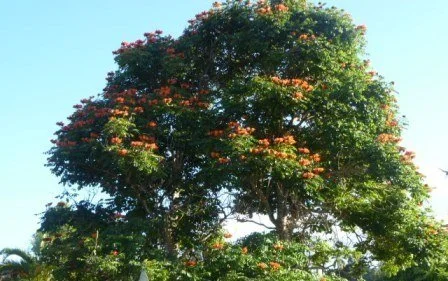
Growing a Flame Tree seedling—commonly known as the Royal Poinciana (Delonix regia)—is a fantastic choice if you're looking for a fast-growing, ornamental shade tree with stunning bright red-orange flowers. Native to Madagascar and popular in tropical/subtropical areas, this tree needs warmth, space, and sunlight.
Here’s a complete guide to help your Flame Tree seedling grow successfully:
🔥🌳 How to Grow a Flame Tree (Royal Poinciana) Seedling
1. Tree Overview
Botanical Name: Delonix regia
Common Names: Flame tree, royal poinciana, flamboyant tree
USDA Zones: 9–12
Height: 30–40 feet tall
Canopy Spread: 40–60 feet wide (umbrella-like shape)
Growth Rate: Fast-growing
Lifespan: 30–50+ years
2. Ideal Growing Conditions
☀️ Sunlight
Requires full sun — minimum 6–8 hours/day
More sun = more blooms
🌱 Soil
Well-draining sandy or loamy soil
Slightly acidic to neutral (pH 6.0–7.5)
Avoid heavy clay or poorly drained sites
🌡️ Temperature
Prefers warm temperatures (70–100°F / 21–38°C)
Frost sensitive: protect young trees from cold (below 40°F / 4°C)
3. Planting Instructions
📅 Best Time to Plant
Late spring to early summer after frost danger is over
🕳️ How to Plant
Choose a large open space far from structures, septic tanks, or sidewalks (roots can be aggressive).
Dig a hole twice as wide as the root ball and about the same depth.
Set the seedling upright with the root collar at ground level.
Backfill with native soil; avoid packing too tightly.
Water deeply after planting.
Apply mulch around the base (keep away from the trunk).
📏 Spacing
Plant at least 15–20 feet from other trees or buildings
4. Watering
Seedlings: Water 2–3 times/week to keep soil evenly moist (not soggy)
Established trees: Drought-tolerant; water during extended dry periods (every 7–10 days)
Do not overwater — roots dislike standing water
5. Fertilizing
Use a balanced fertilizer (10-10-10 or 15-9-12) 2–3 times during the growing season
Reduce feeding in late fall/winter
Enrich with compost in spring to boost flowering
6. Pruning
Time: Late winter or early spring
Why: Remove weak or crossing branches, shape the canopy, and promote strong structure
Start training early to avoid messy or low-spreading branches
7. Flowering & Fruiting
First bloom: Typically in 3–5 years
Flowers: Bright red-orange, large and showy, bloom in late spring to early summer
Seed pods: Long, flat, woody pods up to 2 feet long
8. Pests & Diseases
Generally pest-resistant, but watch for:
Caterpillars
Scales or mealybugs (treat with neem oil)
Disease issues: Root rot in poorly drained soil
9. Container Growing
Not ideal long-term due to size, but possible while young
Use a large pot with drainage holes
Move indoors or cover during cold snaps
Repot annually until planted in-ground
✅ Quick Tips
Needs full sun and warmth to thrive and flower
Water consistently when young; reduce as tree matures
Give it space—roots and canopy spread wide
Protect from frost when young
Add compost or mulch yearly to feed and insulate roots